3D Wabe Text Effect: Modern Depth
In the crowded visual landscape of social media and digital marketing, flat design often struggles to capture immediate attention. Viewers scroll quickly, and static, two-dimensional graphics can easily blend into the background noise. This is where the 3D Wabe Text Effect emerges as a powerful tool for creators who need their message to pop. By combining layered geometry with vibrant color palettes, this style transforms simple typography into a tactile, engaging focal point that demands a second look.
The appeal of this effect lies in its balance between modern minimalism and playful complexity. It is not merely about adding a shadow; it is about constructing a sense of physical presence on a digital screen. When executed correctly, the text appears to float above the background, inviting the viewer to explore the depth and detail of the composition. For designers, marketers, and content creators, mastering this aesthetic offers a versatile way to elevate brand identity and enhance visual storytelling without relying on heavy photography or complex illustrations.
Deconstructing the Layered Aesthetic
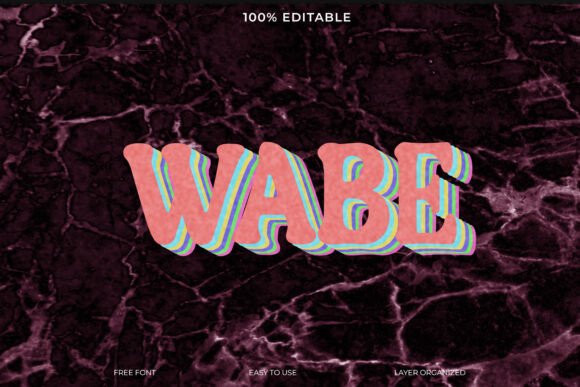
To understand why the 3D Wabe Text Effect works so well, we must look at its core components. The style is defined by a stacked, extruded appearance that mimics the look of cut paper or molded plastic. Unlike traditional bevel-and-emboss techniques that can often look dated, this approach uses distinct, solid layers to create depth. Each layer acts as a step back in space, creating a rhythmic pattern that leads the eye from the foreground text to the background.
A key characteristic of this style is the use of contrasting colors. Typically, the front face of the text features a bold, primary hue—such as the striking pink seen in many popular examples—while the side layers utilize complementary or analogous shades. This color differentiation enhances the perception of depth. When set against a textured backdrop, such as dark marble, the smooth, clean lines of the 3D text stand out sharply. The contrast between the organic, chaotic veins of the marble and the geometric precision of the lettering creates a sophisticated tension that feels both luxurious and contemporary.
The drop shadow plays a crucial role as well. It anchors the text to the scene, preventing it from looking like it is merely pasted on top. A soft, diffused shadow suggests ambient lighting, while a harder shadow can imply a direct light source, adding to the realism. These elements combined create a graphic that is fully editable and scalable, making it ideal for various formats from Instagram stories to large-format posters.
Practical Applications for Creators
The versatility of the 3D Wabe Text Effect makes it suitable for a wide range of professional applications. Understanding how to adapt this style to different contexts can significantly enhance its effectiveness.
- Social Media Graphics: On platforms like Instagram and Pinterest, visuals are the primary driver of engagement. Using this text effect for quote cards, announcement headers, or promotional banners can increase stop-rate. The depth draws the eye, while the clear typography ensures readability even on small mobile screens.
- Brand Identity and Logos: For startups and small businesses looking to establish a modern, playful brand voice, incorporating 3D elements into logotypes can convey innovation and creativity. It works particularly well for tech companies, creative agencies, and lifestyle brands targeting a younger demographic.
- Digital Posters and Flyers: Event promoters can use this style to highlight dates, names, or themes. The layered design allows for hierarchical emphasis, where the most important information is brought forward visually through size and color intensity.
- Presentation Decks: Educators and corporate presenters can break the monotony of standard slides by using 3D text for section headers. It adds a polished, professional touch that suggests effort and attention to detail.
Design Strategies for Maximum Impact
While the aesthetic is appealing, successful implementation requires thoughtful design choices. Here are several strategies to ensure your 3D Wabe Text Effect remains effective and audience-friendly.
Color Harmony and Contrast
Choosing the right color palette is critical. The pink font mentioned in popular iterations works well because it contrasts strongly with dark backgrounds. However, you should not limit yourself to one scheme. Consider your brand colors and the emotional response you wish to evoke. Warm colors like reds and oranges tend to advance visually, making them excellent for the front face of the text. Cooler colors like blues and purples can recede, making them suitable for the deeper layers. Always ensure there is sufficient contrast between the text and the background to maintain accessibility and readability.
Typography Selection
Not all fonts work equally well with 3D extrusion. Bold, sans-serif typefaces with uniform stroke widths are generally the best candidates. They provide a solid base for the layers and maintain clarity when stacked. Thin or overly decorative scripts may lose their legibility when extruded, as the layers can become muddy or indistinct. Experiment with geometric fonts to achieve a clean, modern look that complements the structured nature of the 3D effect.
Background Integration
The background serves as the stage for your text. While dark marble is a popular choice due to its elegance and neutral tone, other textures can offer unique vibes. Concrete, brushed metal, or even subtle gradients can work depending on the context. The key is to ensure the background does not compete with the text. If the background is busy, simplify the text colors. If the background is plain, you can afford more complexity in the text layers.
Adapting for Different Audiences
Different audiences respond to visual cues in varied ways. For a corporate audience, keep the colors muted and the design clean. Use navy blues, grays, and whites to convey professionalism and stability. For a youth-oriented campaign, embrace vibrancy. Neon greens, electric pinks, and bright yellows can create energy and excitement. Educators might prefer softer pastels that are easy on the eyes while still providing enough depth to engage students.
Freelancers and hobbyists can use this effect to showcase their technical skills in portfolios. Demonstrating an ability to manipulate light, shadow, and perspective in 2D software shows a high level of design proficiency. It signals to potential clients that you understand modern trends and can deliver high-quality visual assets.
Maintaining Consistency and Originality
One challenge with trending design styles is the risk of appearing generic. To keep your work original, experiment with unconventional angles. Instead of a straight-on view, try tilting the text or applying a slight perspective distortion. Play with the number of layers; sometimes fewer layers create a sleeker look, while more layers add a sense of weight and importance.
Consistency is also vital for brand recognition. If you adopt this style for a campaign, apply it uniformly across all materials. Use the same font family, similar color palettes, and consistent lighting directions. This creates a cohesive visual language that helps audiences instantly recognize your content. However, do not be afraid to iterate. Test different variations to see which resonates most with your specific audience metrics.
Ultimately, the 3D Wabe Text Effect is more than just a visual trend; it is a functional design solution for cutting through digital clutter. By understanding its structural elements and applying them with strategic intent, creators can produce content that is not only beautiful but also effective in communicating their message. Whether you are designing a poster, a social post, or a brand logo, this technique offers a pathway to creating memorable, impactful visuals that stand the test of time.