Crafting Architectural Miniatures: A Guide to the 3D Amsterdam Houses Laser Cut Bundle
The intersection of digital design and tangible craftsmanship has opened new avenues for hobbyists, interior designers, and educational institutions alike. Among the most captivating projects in this realm is the creation of intricate architectural models that capture the essence of historic cityscapes. The 3D Amsterdam Houses Laser Cut Bundle represents a sophisticated approach to this craft, offering enthusiasts a pathway to recreate the iconic charm of Dutch canal houses with precision and ease. This collection is not merely a set of files; it is a comprehensive toolkit designed to bridge the gap between conceptual art and physical reality.
For those unfamiliar with the architectural nuances of Amsterdam, the city’s housing style is distinct. Characterized by narrow facades, stepped gables, and large windows, these structures tell a story of urban density and historical ingenuity. Translating these complex three-dimensional forms into flat materials requires meticulous planning. This bundle addresses that challenge by providing pre-engineered designs that account for material thickness, joint integrity, and aesthetic balance. Whether you are a seasoned laser cutting professional or a novice exploring the possibilities of desktop fabrication, understanding the components and potential of this project is essential for achieving a high-quality result.
Understanding the Digital Assets and File Compatibility
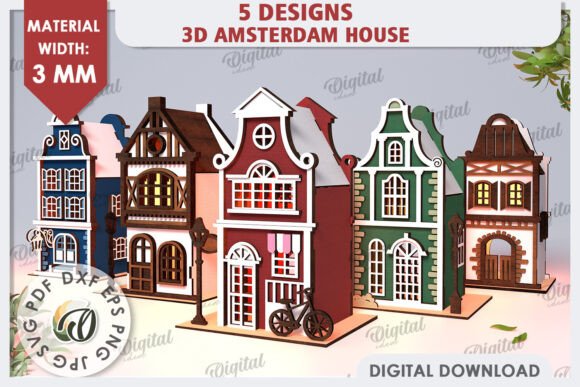
One of the primary advantages of purchasing a digital bundle like this is the versatility of the provided file formats. The 3D Amsterdam Houses Laser Cut Bundle comes packaged in a zip folder containing five unique designs. Each design is available in SVG, DXF, EPS, PDF, JPEG, and PNG formats. This extensive compatibility ensures that users can work with their preferred software and hardware without the need for complex conversions or troubleshooting.
- SVG and DXF: These are vector-based formats ideal for laser cutting machines. They preserve the mathematical precision of lines and curves, ensuring clean cuts regardless of the scale.
- EPS and PDF: Often used in graphic design and printing, these formats allow for easy viewing and minor adjustments in programs like Adobe Illustrator or CorelDRAW.
- JPEG and PNG: Raster images included for reference, previewing, or use in digital marketing materials if you plan to sell your finished creations.
Having access to multiple formats eliminates technical barriers. For instance, a user with a Glowforge might prefer SVG files for their seamless integration with cloud-based software, while an industrial operator using AutoCAD might rely on DXF files. This flexibility underscores the bundle’s utility across different tiers of technology, from home hobbyist setups to professional fabrication shops.
Material Selection and Technical Specifications
To achieve the intended structural integrity and visual appeal, adhering to specific material guidelines is crucial. The designs in this bundle are optimized for a material width of 3mm. This thickness is a standard in the laser cutting industry, particularly for plywood, MDF, and acrylics. Using 3mm material ensures that the tabs, slots, and interlocking mechanisms fit together snugly without requiring excessive force or additional adhesives, although glue can be used for permanent stability.
When selecting your material, consider the grain direction if using wood. Plywood offers a warm, natural aesthetic that complements the historical vibe of Amsterdam architecture. Birch plywood, in particular, is favored for its fine grain and minimal splintering during the cutting process. Alternatively, acrylic can provide a modern, sleek look, especially if backlit for display purposes. However, it is important to note that the fit may vary slightly depending on the machine’s kerf—the width of the cut made by the laser. Users are encouraged to perform test cuts on scrap material to calibrate their settings before committing to the final pieces.
Applications Across Diverse Audiences
The versatility of the 3D Amsterdam Houses Laser Cut Bundle extends beyond simple decoration. Its applications span various sectors, each leveraging the model’s detailed design for different purposes.
Educational Tools for History and Geometry
Educators can utilize these models as hands-on teaching aids. In history classes, assembling the houses can spark discussions about European urban development, trade, and architectural evolution. In mathematics and geometry lessons, the models serve as practical examples of 3D spatial reasoning, symmetry, and structural engineering. Students learn how two-dimensional shapes combine to form complex three-dimensional objects, reinforcing abstract concepts through tactile experience.
Interior Design and Home Decor
For interior designers and homeowners, these models offer a unique decorative element. The intricate details of the gables and windows create striking shadows when lit, making them perfect for shelf displays, mantelpieces, or office desks. They can be painted to match specific color schemes or left natural for a minimalist look. The ability to customize the finish allows creators to integrate these pieces seamlessly into existing decor styles, from rustic to contemporary.
Commercial and Retail Displays
Business owners, particularly those in travel agencies, boutique hotels, or cafes with a European theme, can use these models to enhance their ambiance. They serve as conversation starters and brand enhancers, signaling attention to detail and cultural appreciation. Furthermore, crafters can assemble and sell these models at artisan markets, tapping into the growing demand for handmade, personalized home goods.
The Assembly Process: From Flat Pack to 3D Structure
Assembling the 3D Amsterdam houses is a rewarding process that requires patience and precision. The designs are engineered to be intuitive, but a methodical approach yields the best results. Begin by organizing the cut pieces according to their respective house designs. Since the bundle includes five different designs, keeping them separated prevents confusion.
Start with the base structure, typically the floor plates and side walls. Ensure that all slots are clear of charred residue, which can interfere with the fit. Gently press the tabs into the corresponding slots, applying even pressure. If the fit is tight, a small amount of sandpaper can smooth the edges. As the structure takes shape, add the roof elements and gable details. These upper sections often feature the most intricate cutouts, so handle them with care to avoid breakage.
Once assembled, the models can be further enhanced with painting or staining. Acrylic paints work well on wood, allowing for vibrant colors that mimic the original Amsterdam facades. For a more authentic look, consider using wood stains followed by a clear sealant. This not only protects the model but also highlights the natural grain of the material.
Maximizing Creativity and Customization
While the bundle provides complete designs, it also serves as a foundation for further creativity. Users can modify the files using vector editing software to add personal touches. For example, you might add custom text to the base, change the window patterns, or combine elements from different houses to create a unique hybrid structure. The possibilities of creation are endless, limited only by your imagination and technical skills.
Additionally, these models can be integrated into larger dioramas. Combine multiple houses to create a street scene, adding miniature trees, bridges, or figures to bring the environment to life. This scalability makes the bundle suitable for both small, standalone projects and expansive installations.
Support and Community Engagement
Embarking on a new crafting project can sometimes raise questions. Whether you are unsure about file compatibility, material choices, or assembly techniques, support is available. The creator encourages customers to reach out with any inquiries. This open line of communication ensures that users can troubleshoot issues quickly and make the most of their purchase. Engaging with the community of makers who have used the bundle can also provide inspiration and tips, fostering a collaborative environment where knowledge and creativity are shared.
In conclusion, the 3D Amsterdam Houses Laser Cut Bundle is more than just a digital product; it is an invitation to engage with art, history, and technology. By providing high-quality, versatile files and clear specifications, it empowers users to create beautiful, meaningful objects. Whether for education, decoration, or commercial use, these models offer a satisfying blend of challenge and reward, resulting in a tangible piece of Amsterdam’s architectural heritage.